
 To sterilize containers wash with 10 parts hot water and 1 part bleach.
Pour dry soil into the sterilized cells or whatever container preferred, do not pack tightly. Gently tap down the soil evenly with your fingers. Remove any obtrusive pieces of bark or perilite, like the piece of perilite above.
 Using the seedling irirgator water the soil until the soil is saturated, but not dripping or pooling water.
 I poured the seeds out on a large index card and determined how many seeds I had. (I may be a bit OCD for lining up the seeds, but they look great lined up like that.) Make sure to make labels, above labels are made for specifically for plant labeling. You can make labels out of Popsicle sticks or pieces of plastic. Make sure to write in permanent marker since water and sun can deteriorate other markers.
 Store any seeds that you don't plant in dry containers.
 Place the seeds individually into their own area, as centralized as possible to provide enough room for roots to stabilize the plant. Above is a pepper seed, when planting small seeds check to see if the seed is stuck to another. Separate any stuck seeds and plant.
 Place a label on each row to identify the seedlings. Tomato and pepper seedlings look a bit different from one another. I alternated the tomato and peppers, just in case I loose any of the labels.
 Cover the seeds gently with loose dry soil. Gently cover each seeds, do not move the soil to much because you can carry seeds from one place to another. Re-water the finished layer to settle the soil and to begin germination.
 Place a layer of plastic wrap over the seeds to create a temporary hothouse. Set the tray or whatever you planted in on top of the fridge. Use your fridge as a heat mat and remember to check daily for moisture level. If the soil turns light brown then the seeds need water. When plants begin to emerge, remove the plastic wrap and set in a south facing window.
 Watch for more plantings and tutorials on gardening soon. Have fun planting and God bless your gardens to be bountiful.

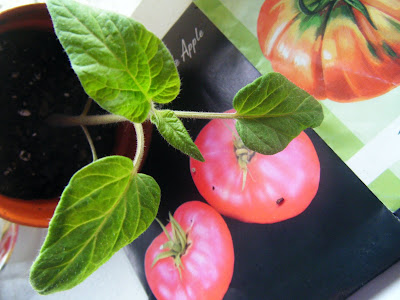
 I recycled a worm tub from the fishing store in town. These are cantaloupes, also harvested from fruit from the Delano market.
 Top middle: Butternut Squash, left: tomato, bottom middle: cutting of a Wandering Jew. The Coke bottle on the left hold a pretty mum; I love collecting old glass bottles and jars and turning them into vases and what not.
 Happy Planting.