Showing posts with label Farn Girl Friday. Show all posts

Tuesday, December 11, 2012

Homemade Peanut Butter Cups


You see the commercial about how chocolate and peanut butter are the perfect pair: they're right! Chocolate adds a sweetness that nearly no one can turn down while peanut butter adds a toasty salty note, YUM! These cups make great Christmas gifts when bagged in cellophane bags and tied off with pretty ribbon.
 
Peanut Butter Cups
1 Cup Powdered Sugar
1 Cup Creamy Peanut Butter (Peter Pan: Creamy)
1 Stick Butter, Melted
1 1/2 Bars Chocolate Almond Bark
Candy, Sprinkles, or Edible Glitter (Optional)
 
Instructions:
1. Fill a double boiler with water until it reaches the bottom of the insert pot. If you don't have a double boiler set a glass bowl on top of a pot with boiling water barely reaching the bowl to prevent pressure from pushing the bowl up. Set the heat to high until it reaches a boil, reduce to low and allow to simmer.
2. Mix powdered sugar, peanut butter, and melted butter. Mix until combined adding powdered sugar if the mix is much too sticky, light stickiness is okay. Set bowl into fridge for a few minutes until it is completely chilled.
3. Using a mini muffin pan pour about 1 teaspoon of melted chocolate into each cup. Lightly shake pan to even out the chocolate, filling in spaces with extra chocolate. Allow chocolate to set up and harden.
4. Remove chilled peanut butter mixture from fridge. Roll teaspoon sized balls out with palms and place onto a baking sheet. When all the mix is rolled out place the baking sheet into the fridge to re harden, this prevents the butter from melting completely when the hot chocolate is poured over.
5. Place re-hardened peanut butter ball onto chocolate in the muffin pans. Cover with chocolate until completely covered and level. Gently shift the pan back and forth to level the chocolate topping.
6. Optional- sprinkle small candies or sprinkles on to the melted tops of the cups.
7. Insert finished muffin pans into fridge to set the chocolate quickly.
8. When cups are completely hardened invert pan onto a counter top lined with parchment paper or aluminum foil.


If a portion is exposed use a toothpick dipped into chocolate and dab chocolate to reseal. 

YUMMY!!!
 
~~~
“I am entering this Homemade Peanut Butter Cups in the Creative Holiday Recipe Contest hosted by Confessions of a Cookbook Queen and Cookies and Cups!“
 

Friday, November 30, 2012

How to Start a New Yucca Plant


Do not attempt now!     I uploaded the pictures for this tutorial, but forgot about it. Yuccas are sharp spiked shrubs found around many rural cemeteries in the Appalachian area and on homestead around the south. According to Decoration Day in the Mountains:Traditions of Cemetery Decoration in the Southern Appalachians, a book that explains church homecomings & decorations in the south, states that yuccas were once placed on graveyards to prevent animals from scavenging the freshly buried bodies or the superstitious says the spikes keep away demons. Our yucca in the front yard came from a transplant, similar to the specimen below, came from my home church over ten years ago. The plant is now over eight feet tall, with pruning. These are intriguing old plants that take little care to grow and are great conversations pieces, not to mention the beautiful tall blooming milky white blooms that it casts in the summer. I will advice not planting these near places were children play or there is high traffic because the spikes are needle/knife sharp; our main yucca... it's by the front door.. my mom thought it would stay little.. oh well.
 
 
I learned the technique of transplanting young yuccas by thwoing ripped up suckers, small sprouts at the base of the mother plant, into the woods. You can see small roots emerged when the plant lodged itself into a mound of mulched leaves.
 
 
This is simple: pull a sucker or a small yucca out of the ground, maybe from the side of the road or from a family cemetery, it's okay these suckers have their name for a reason they suck nutrients from the mother plant. Second strip off the old dried leaves. Even if the plant has no roots place cleaned plant into soil until the white is covered, it will root on its own like it would in nature. Keep soil moist until roots establish, then treat it like a cactus or sedum.. water sparingly.

Yuccas are strong survivors. These roots are very young, yet thick and white: a sign of health.
 
 
This is an established yucca with the old leaves ripped off at the base.


Tuesday, November 27, 2012

I'm Back.... At Least for the Moment (Red Velvet Whoopie Pies & New Frosting)

With life moving full throttle I've remembered that I do indeed have a blog and would love to start working on it again. Since Christmas is right around the corner I want to post some crafts, food, and other goodies to help inspire your celebration of Jesus Christ's birthday. I'll start today's post with my experience making 'Woman's Day' magazine Red Velvet Whoopie Pies. These whoopie pies were fun to make and impressed my family big time. They are also an acquired texture kind of treat: part cake, part cookie, and no pie *hmm.*

I've always wanted to try one of these Northern treats or Amish treats as you may want to refer to them: whoopie pies. I baked the above recipe (in the link) for our first potluck Thanksgiving last Sunday. First piece of advice, follow direction order; out of my tendencies to mix it all at once I caused a mix mess. Trying to mix red food coloring into a very stiff dough will ruin your clothes, thankfully (going with Thanksgiving here) they were just lounging clothes. Second, do not bake until the maximum time, the pies crack and and form an almost crunchy shell. Third, when using cream cheese frosting serve the pies within two hours of cooking to be on the safest side, but the sugars in the marshmallow fluff should inhibit bacteria- preventing spoiling. Fourth, use a small ice cream scoop to make even portions of pie halves; they look more uniform and are easy to mate up when frosting.  Fifth, enjoy... they're delicious and rich little treats.


~~~
 
 
We had a second Thanksgiving on the actual day, this time I want to rave about the new coolwhip frosting. I used one tub, which was not enough, to decorate a festive carrot cake. Advice: by more than one container, when coloring only use icing gels or powder to prevent 'icing' from melting, and do not over mix which will break up the air bubbles.
 
The carrot cake pictured is iced using the cream cheese flavored icing, the orange band down the middle was a scattered improvising of standard canned cream cheese frosting, like I mentioned there is not enough frosting in the tubs, but it is so scrumptious!!!


~~~
Shared with Farm Girl Friday


Friday, July 20, 2012

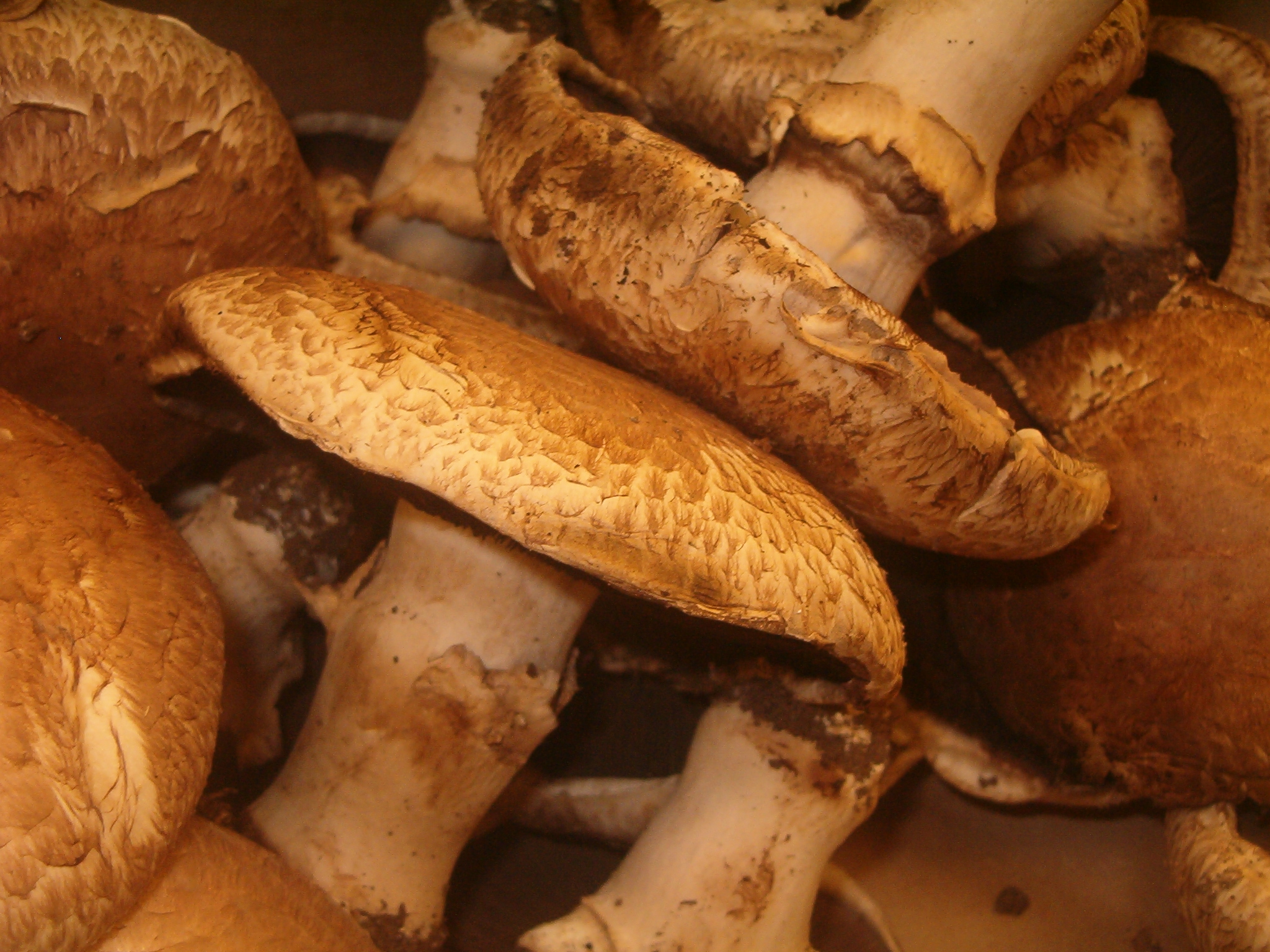
Portobello Mushrooms with a Mushroom Garlic Gravy

At the first of the week our local grocer discounts produce that has just simply not sold, such as over ripe bananas, veggie/fruit dips, and overstock produce. One of our favorite buys is the overstock mushrooms, so now the fridge has a beautiful pack of large sliced portobello mushrooms and a big imagination plus a stocked fridge. So why not veggies covered in a gravy, yum! The lemon juice used to saute the mushrooms adds a nice acidity to balance the rich butterness of the gravy, extra yum!

Portobello Mushrooms with a Mushroom Garlic Gravy
1 Package of Sliced Mushrooms, preferably portobellos
2 Teaspoons Lemon Juice
Butter or fat drippings
1 Tablespoons Minced Garlic, I used a pre-minced refrigerated tube version
Milk
Flour
Salt

1. Saute the mushrooms in about 1 tablespoon of butter or drippings, lemon juice, and 1 teaspoon minced garlic. Saute on medium-high until browned yet still firm. Drain mushrooms on a napkin and set aside.

2. In pan add a little extra butter, about 1 table spoon more to the leftover browned bits. Add the rest of the garlic and about 1 to 2 tablespoons of flour. Whisk until fully incorporated and all lumps of flour are broken down. Add about 1 cup of milk and continue to whisk until the gravy comes to a boil. Add salt as desired, about 1/2 teaspoon. Boil until the gravy is to desired thickness adding milk for a thinner viscosity. Allow the gravy to cool slightly and it will continue to thicken.

3. Serve gravy over drained mushrooms for a savory meat free dish.


Part of the Homestead Barn Hop

Monday, May 16, 2011

How to Divide & Pot Calla Lilies & Other Rhizome Plants

Rhizomes are plant bulbs that are flat in shape and very bulbous in size, a typical example of a rhizome is ginger. Ginger is the bulb of a tropical plant, mainly found in Hawaii, Asia, and the Philapens. Plants that you may know that have rhizome bulbs may include Irises and Calla Lilies. Rhizome, like other bulb forms, are perennial bases for plants, so they come back each spring or summer.


You walk outside and find this, a weedy mess. There is also a few plants emerging that must not be cut down: Calla lilies. Here is a tutorial on divide and pot rhizome based plants.


1. Dig a wide base around the plant so not to damage the rhizome and delicate roots.


2. Remove non-desired plant debris including the roots of said debris. Do this gently.


3. After cleaning and sprucing the plant remove inspect the roots for any infestation of bugs or root.


3. Remove the secondary plants that have budded from the parent plant, make sure it has its own rhizome and roots intact.


4. Choose a pot to plant secondary plants that are large enough to retain water and have no need transplant the plant any time soon. Fill to the top with light airy potting soil.


5. Dig a deep hole into the soil that can support the plant base
 and wide enough to allow room for the roots.


6. Some roots may be very long, gently coil the around the base loosely.


7. Gently press the soil down firmly and position the plant as straight and natural as possible. Water thoroughly to settle the dirt and eliminate any air pockets.


8. Replant the parent plant add new mulch and water very generously until the plant is reestablished in the soil.


9. Within a month or so you'll have extra pretty plants like these to give away to friends.
~~~
Homestead Barn Hop hosted by

and
Farm Friday/Girl Friday at

Friday, April 8, 2011

How to Purchase and Divide Perennials

When perennials are planted to closely together or grow closely together over time it is best to divide the plants before they become stunted. I purchased a pot of Sweet Williams aka Dianthus from Walmart last Fall; Sweet Williams are bi-ennials, yet they willl still come back in our climate. It is best to buy perennials, from Walmart and other super stores that have garden centers, in during the last weeks of Summer or Fall. Plants are discounted later in the season, because they lack blooms and are not as pretty at the moment; you only need to inspect the roots by gently pulling the plant out of its pot. Look for white and thick roots with no sign of being root bound. These plants can be discounted 25% or more, this is good for perennials that will continue to grow each season.
Once you have purchased your plants or dug the plant and its root ball up, you can either plant them soon or wait until the Spring. The Sweet Williams were overwintered in their pots and need to be divided. The plant to be devided needs to have at least three inches of growth, this guides you so you do not cut the stems. Lets get to work.

1. Remove the plant from the pot. Shake of any bugs that may be in the rot ball, I commonly find rolly-polly bugs at the drainage hole site. Cut the plant ball in half, using a knife or the blade of a hand trowel. I used the trowel to cut the ball.


2. Now divide the halves into quaters. Be careful to not cut into the stems of the plants.


3. Remove any dead leaves and stems. You can pull the quaters apart.


4. These plants were very dry and easrier to divide this way. To rehydrate you can place the plants into a wash basin and set a rock or brick under the side with the stems to allow the roots to only get soaked.


5. Water the plants and alow to set in the water for at least 10 minutes. Be sure to rotate the plants so that all sides are drenched.


6. Now you can plant your new plants into pots or straight into the ground now.
~~~
Happy Rainy Friday!
&

Wednesday, March 30, 2011

What's Poppin' Up & Out Outside

Every time I walk outside I see a new blossom or a new growth, then I say "there is going to be no more snow. There are to many plants and nature knows what's comin' up." When we had a couple hard snows, hard snow for us is anything over 6" of snow, everyone would mention how the almanac predicted a big blizzard in March. There are only a couple more days  of March left and no snow; but, there is lots of good rain. The rain has speed up blooming on a few plants, so nature does know what the weather will be. If she didn't then she wouldn't be exposing herself everywhere, thank goodness her cheeks are colorful and brightens these gloomy days. I would like to show you a few photos of the Dogwoods and Strawberries in bloom now.

Around here I grew up learning how the Dogwood represents Christ's nailing to a cross made of Dogwood, that was once a mighty tree and now is smaller because of the shame of bearing Christ's beaten body.


The four leaves represent the cross.


The blush color of Dogwoods is said to be the blood Christ shed for us at Calvary.

 ~~~~~

I can't wait to stain my fingers with red juice will making jam this season. The bloom on the left has already been fertilized and will soon form a berry, on the right the bloom is in need of a little honeybee companionship.


 Strawberries around our house don't make it to ripeness and being picked. The rabbits and other creatures love gobbling up the fruit.


~~~
Have a great weekend!